
All Lifestyle
Moringa for Pets: Benefits, Side Effects, and Safe Feeding Guide
Malunggay, or moringa, isn’t called a “miracle tree” for nothing. You’ve probably had it in every single meal you’ve had at home, but did you know it can benefit your cats too?

Moringa for Pets: Benefits, Side Effects, and Safe Feeding Guide
Growing up in Southeast Asia, you’d most often hear about parents teaching their kids to eat the malunggay leaves in their tinola, sinigang, or munggo (mung bean soup). They do this not just because it’s a vegetable, but because it’s not just ANY vegetable. Moringa, more locally known as malunggay, is lauded as a “miracle tree” for a reason.
If you’re reading this, you’re probably already aware of the abundance of its benefits and are wondering if your pet cats can have them too. Valid question; just goes to show how much you care about your fur babies!
What is Moringa?
Malunggay (scientific name: Moringa oleifera) is a plant native to Northern India and has been widely planted in Asia, Africa, and tropical and subtropical regions of Central America. According to a scientific study published on ScienceDirect, Moringa oleifera has great economic significance in addition to being an ornamental tree since nearly all of its parts, including the leaf, root, and seed, may be used as food. Because of its quantity of active components, it has a variety of pharmacological effects, including anti-oxidation, anti-inflammatory, anti-diabetic, lipid-lowering, anti-cancer, and anti-bacterial properties. As a result, Moringa oleifera has long been recognized as the "miracle tree.”
Can cats eat moringa?

With the general benefits of moringa and the fact that it is safe and non-toxic for pets, it’s easy to let your pet have it. To be fair, it’s no problem giving them to dogs. But when you look online, you’ll find debates among cat owners on whether it’s actually recommended. One logical argument says that cats are carnivores that typically do not consume plant-based food, so giving them something that they wouldn’t eat by instinct (such as moringa) is basically going against their nature, despite the benefits.
However, this is a discussion in black and white that’s also influenced by different perspectives. For one, there are many different ways of consuming moringa: raw leafy greens, moringa powder, moringa vitamins, moringa oils, moringa in pet food, and probably a hundred more. Scientifically, moringa IS good for cats just as they are for humans. According to an article from the International Journal of Molecular Sciences, Moringa can lower cholesterol levels, cure viral infections and other parasitic and bacterial diseases, and is effective against diclofenac-induced liver toxicity in animals.
Now that that is cleared out, it all boils down to how you are making your cats consume it. Inarguably, you’ll encounter some problems when you give them in high amounts regardless of the form. Even though you want the best for your cat’s health, you also have to respect what they do eat naturally, or else, you’ll disrupt not only their instinct but also their bodily functions.
Benefits of Moringa for Cats
Moringa is high in vitamins and minerals
According to an article by Medical News Today, moringa contains vitamin A, vitamin B1 (thiamine), vitamin B2 (riboflavin), vitamin B3 (niacin), vitamin C (ascorbic acid), calcium, potassium, iron, magnesium, and phosphorus.
Getting all these vitamins in one plant makes it a superfood for your cat, especially with vitamins A, B, and C, which are considered the best nutrients for cats!
• Vitamin A: Important for vision, skin, and coat health, and immune function.
• B vitamins: For metabolism, energy production, and nervous system function.
• Vitamin C: Supports the immune system and potentially aids in wound healing and collagen production.
Moringa’s antioxidants support the immune system
Aside from vitamins and minerals, many antioxidant plant compounds have also been found in the leaves of Moringa oleifera, such as flavonoids, phenolics, carotenoids, and ascorbic acid.
Researchers note that these antioxidant compounds may be beneficial against oxidative stress caused by UV exposure, which may lead to skin cancer. Some flavonoid compounds may also help manage blood pressure, while oleic acid may help lower blood pressure.
These antioxidants act against free radicals; free radicals are associated with chronic diseases like heart disease, diabetes, and cancer. These diseases are not particularly common in cats, but prevention will always be better than cure, and you would rather be sure than later run to the vet with the risk of losing your pet.
Moringa for digestive health
Healthline Media has listed some moringa benefits to help treat some stomach disorders.
Ever notice that your cats vomit right after eating? Waste of cat food, but worse: colon cancer. Moringa leaves can help prevent it, and it has also shown a laxative effect which makes it a possible option for constipation.
It may also reduce stomach acid secretions, which suggests prevention against peptic ulcers. Moringa may help prevent ulcerative colitis as its anti-inflammatory effects may protect the digestive system from damage.
These studies were conducted on animals, so you can guarantee their effect on your cat!
Moringa helps maintain blood sugar levels
Moringa plant components such as quercetin, kaempferol, glucomoringin, chlorogenic acid, and isothiocyanate help lower blood sugar levels and manage diabetes.
A study posted on the National Library of Medicine showed that out of twenty-three animal studies, twenty-one found that administration of Moringa oleifera led to a statistically significant decrease in animal blood glucose levels. In this study, it was frequently administered as an aqueous or ethanol-based extract.
Why is this significant? High blood sugar levels do not end with diabetes; they also increase the risk of heart disease. Keeping your cat’s blood sugar levels under control is critical.
Moringa has natural anti-inflammatory properties
Having anti-inflammatory properties in your food (even for humans) is essential as a protective mechanism, as inflammation is the body’s natural response to infection or injury. If inflammation continues over a long period, it may lead to chronic health conditions like heart disease and cancer.
Most anti-inflammatory properties can be found in whole fruits, vegetables, herbs, and spices; however, aside from the fact that the degree to which they can help is dependent on the types and amounts, cats do not really consume them.
But in Moringa oleifera, you can find some compounds including phenols, alkaloids, flavonoids, carotenoids, β-sitosterol, vanillin, and moringin.
A 2019 study on the antioxidant and anti-inflammatory activities of Moringa oleifera crude extracts posted on the Multidisciplinary Digital Publishing Institute (MDPI) states that Moringa oleifera leaves had the highest amount of anti-inflammatory and antioxidant compounds compared to the seeds and pods.
Side Effects of Moringa for Cats

Feeding moringa to your cats can turn out more harmful than beneficial when not given the right way. However, this is not anything to be too scared about. It’s just how bad chia seeds can get when taken without proper hydration, but if you know just exactly how to take them, they work wonders. That is why it’s important to make sure to consult the veterinarian before introducing them to your cat.
Why not take the risk? Here are two side effects of moringa for cats:
Moringa causes allergic reactions
There has been a case report on the study Anaphylaxis to Moringa oleifera in North Africa posted on the National Library of Medicine, which confirmed the leaves to be a causative allergen by prick testing. Even though malunggay is widely consumed, both as a vegetable and in herbal medicines, unfortunately, it could be responsible for anaphylaxis reactions despite its anti‐allergic properties.
Allergic reactions for cats include fever, itching, swelling of the face, lips, tongue, or throat, and chest-tightness.
Moringa causes digestive issues
There are several ways in which moringa can upset the stomach: high fiber content, preparation methods, and individual sensitivity.
High fiber foods are excellent when consumed in moderation, but consuming too much can lead to digestive stress like bloating or diarrhea. Proper preparation methods, on the other hand, like cooking, fermenting, or sprouting, greatly minimize the risk of digestive issues. Lastly, which you do not want to underestimate, is individual sensitivity; it’s important to realize that cats have varying sensitivities compared to others and may experience digestive problems even with moderate consumption.
With moringa, you’d really want to be extra careful with your serving, and DIYing can be quite risky. If you want your cats to safely consume and benefit from malunggay, getting cat food infused with moringa is your best option.
Where to Buy Cat Food with Moringa
There isn’t a lot of moringa-infused cat food in the market; the most you can see is moringa powder which people sprinkle into their pet’s food bowl to mix with its wet and dry food. While this is an option, the right moringa dosage for cats and dogs is dependent on weight, age, medical history, and allergies. If you are feeding your cat moringa for the first time with no vet consultation, it’s probably best if you put it back on your shelf and consider Mo and Bear.
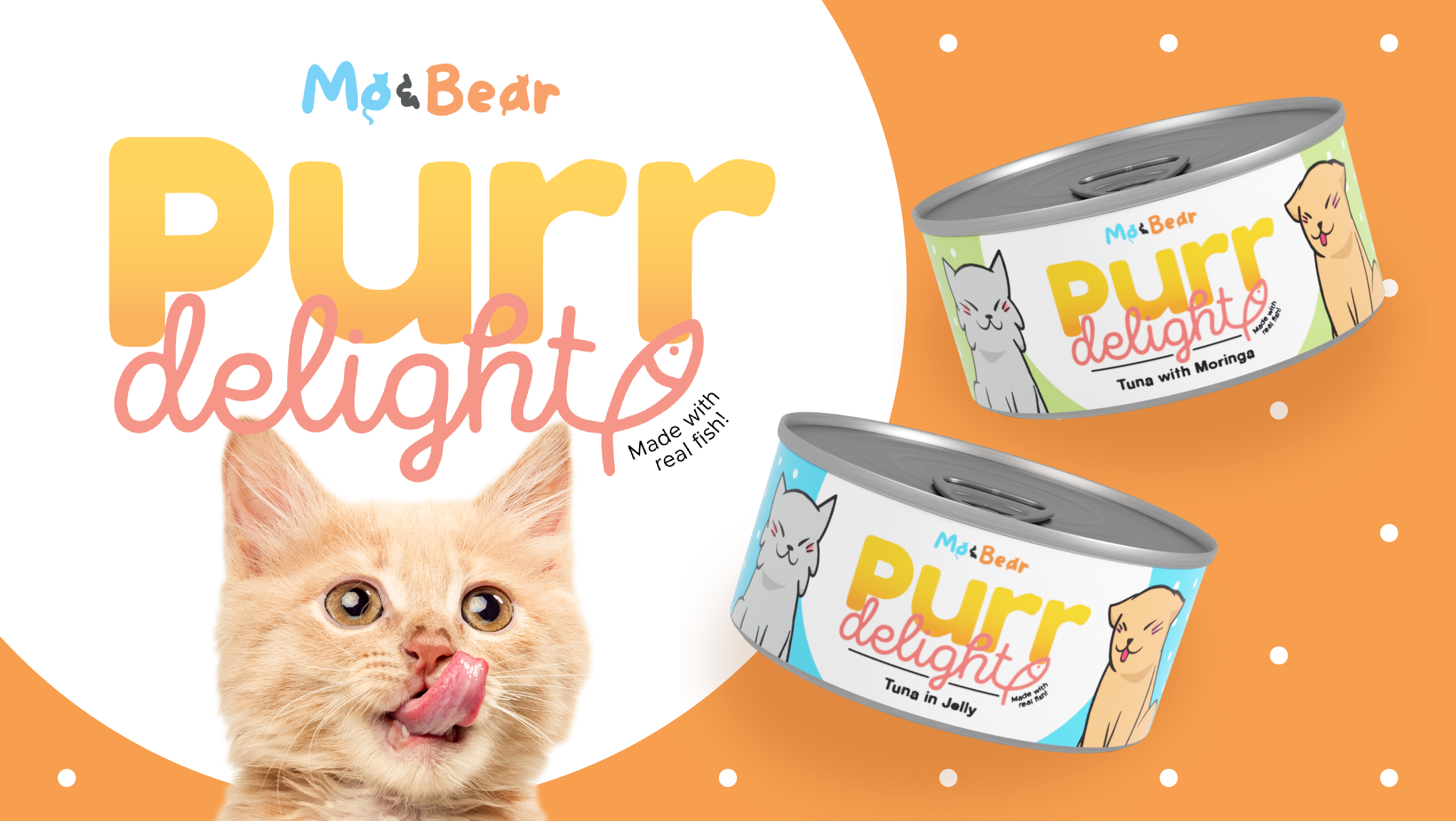
Purr Delight Tuna with Moringa offers high-quality cat food that safely infuses malunggay for a nutritious blend that allows your cat to enjoy a meal while receiving essential vitamins and minerals.
Vitamins include omega-3, vitamins C, D2, and D3, while minerals include calcium, iron, potassium, and sodium. The best part? It’s made with real tuna flakes!
Ready to boost your cat’s health? Buy this online on Iskaparate, along with other pet care products from Mo and Bear!
