
FOOD NOTE
Dim Sum 101: All You Need to Know About This Traditional Chinese Cuisine
More than being a go-to hangout idea with your friends, it’s probably about time dim sum gets appreciated for its centuries-deep history and meaningful originating culture.
Dim sum is a culinary tradition that started along China’s Silk Road teahouses as snacks for resting travelers. It later evolved into an imperial food item during the Song Dynasty and has now become a brunch staple in Cantonese yum cha gatherings, even in Chinese-Filipino communities.
DATE
JANUARY 06, 2026
AUTHOR
ANGELA CLARE AGPAWA
READ
10 Min

Dim Sum 101: All You Need to Know About This Traditional Chinese Cuisine
Dim sum has become quite a frequent order among Filipinos in Chinese restaurants, and even a commonly prepared dish in their households. This has been long prevalent to the point of Filipino dim sum creation, such as siomai (Chinese: siu mai, shumai) and siopao (Chinese: sio pau), which are popular adaptations of Chinese dim sum that have evolved to suit the Filipino palate.
The interesting part is that dim sum isn’t just pork siomai on rice, but centuries of traditional practice and a cultural treasure that extended to Hong Kong, later became part of Cantonese cuisine, and is now a beloved category of dishes all over the globe.
Etymology and Origin of Dim Sum
Dim sum is believed to have originated from the teahouses along China’s Silk Road where travelers would rest with hot tea and small plates before hitting dusty roads again. During the Song Dynasty (960–1279) in China, the imperial chefs created new varieties of bite-sized delicacies and desserts made of milk and bean paste for the emperor.
However, the first written reference to the term was before that, during the Tang dynasty (618–907), where, in the Book of Tang, the word was used as a verb: "I have not finished preparing myself and am not ready for a proper meal; therefore, you can treat yourself to some small snacks." In this context, "dim sum" means "to barely fill your stomach.”
Dim sum is typically associated with yum cha, a Cantonese tradition during brunch which involves a social event or gathering where participants indulge in dim sum and drink tea. This gives sense to the reference in the Book of Tang, which implied the idea that you’re hungry, but not ready for a full-blast meal — pretty much what brunch is about.
If you were to search for the literal translation of the word dim sum, it means “touch the heart” or “so close to the heart,” meaning that it was never supposed to make you full, but to create cherished memories with your loved ones and bring delight to the heart.
Dim Sum Practices and Tradition
While yum cha is both the origin and the present in the dim sum culture, there are more meaningful involvements revolving around dim sum, especially in Filipino-Chinese relations.
Yum Cha
Dim sum is rarely eaten alone as it forms part of yum cha, where families gather for tea and dim sum for breakfast, lunch, or both (but never for dinner) on weekends or special occasions. In the Philippines, this tradition is still commonly practiced in Chinese-Filipino communities, especially in places like Binondo, Manila, the world’s oldest Chinatown. It may not be as ceremonial as the tradition, but it remains indicative of the bond beyond race and culture in the community.

Filipino-Chinese Relations Through Dim Sum
The fact that such an old tradition still lives in some communities proves that dim sum is one thing that strengthens the ties between Filipino and Chinese cultures. Not only do we see traditional Chinese restaurants in Ongpin, but also fast food chains offering siomai rice meals. It shows how Chinese immigrants influenced local food culture and created a bridge between two nations simply through shared meals and culinary practices.
Dim Sum Push Cart
Most dim sum nowadays are either served on the table by waiters or personally picked up at a buffet. But in traditional Cantonese restaurants, such as in Hong Kong and Guangdong, dim sums are both cooked and served in push carts. Diners select dishes directly from the carts, adding spontaneity and authenticity to the experience.
Different types of dim sum carts include traditional wooden carts, stainless steel carts, electric carts, and portable or foldable carts. They are often equipped with steamers, warmers, and display shelves to display various dim sum items.
Common Types of Dim Sum
Here are top dim sum dishes, some even labeled as “heavenly kings of dim sum” by the Hong Kong Tourism Board!
1. Har Gow (Shrimp Dumplings) - Translucent dumplings filled with shrimp, bamboo shoots, and pork fat for texture.
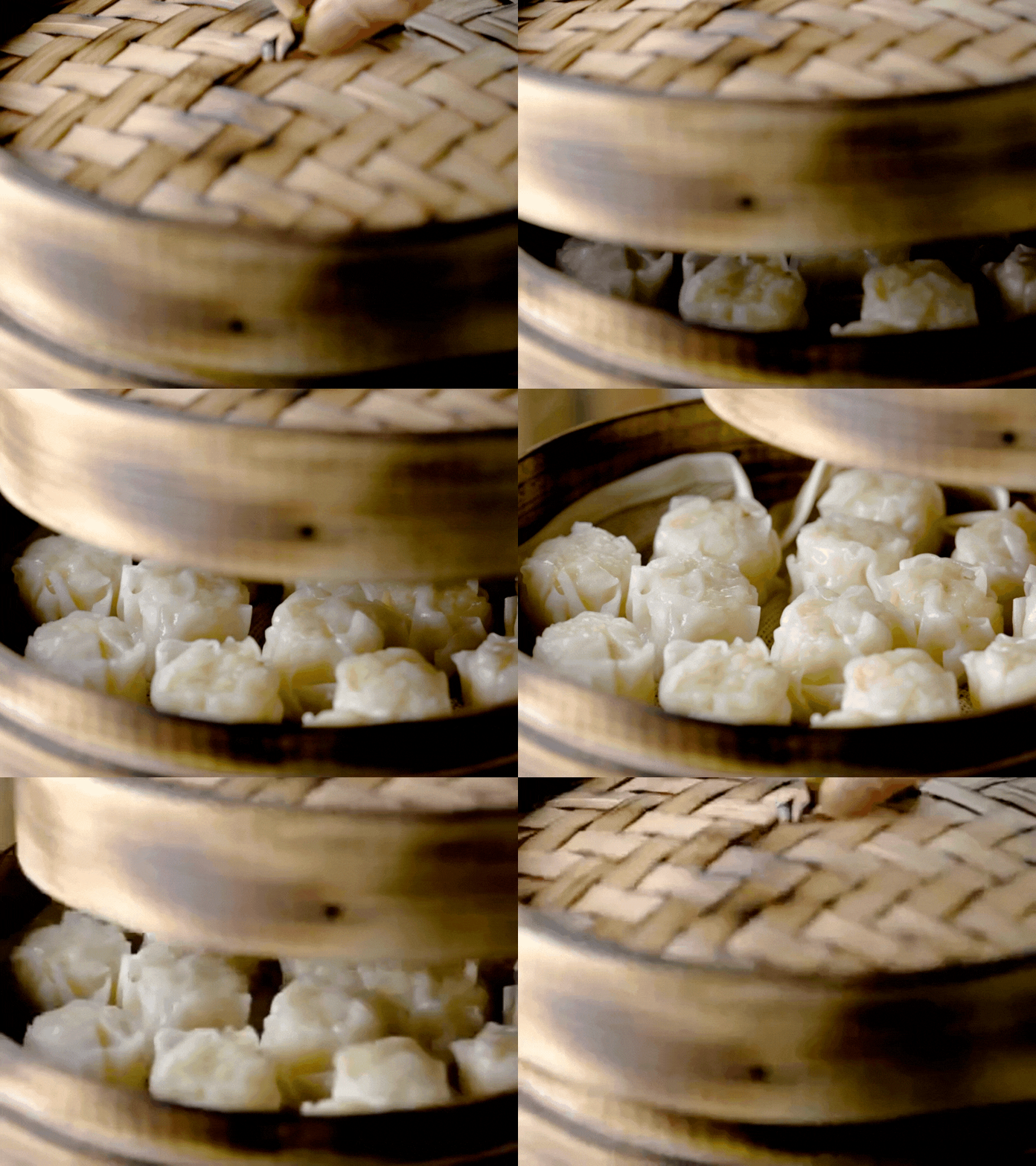
2. Siu Mai (Pork and Shrimp Dumplings) - Topped with crab roe or grated carrots, widely adapted in Filipino-Chinese eateries.
3. Char Siu Bao (BBQ Pork Buns) - Soft steamed buns filled with sweet-savory roasted pork.
4. Cheung Fun (Rice Noodle Rolls) - Rice noodle sheets wrapped around shrimp, beef, or BBQ pork, served with sweet soy sauce.
5. Egg Tarts (Dan Taat) - Buttery crust with silky egg custard, the Cantonese cousin of the English custard tart made either with shortcrust pastry or puff pastry.
Every region in China has its own specialties, and restaurants often create signature items, leading to thousands of dim sum recipes across Asia.
Where to Buy Dim Sum
Want to buy siomai online? Sellers of authentic Chinese dim sum are all over the internet. You can check out Wei Ming Dian on Iskaparate, they offer all sorts of authentic Chinese food, including bean curd roll, buchi, even radish cake and tikoy! Just place an order and it’ll be delivered right to your home.

Dim Sum Etiquette
Like every other tradition, yum cha involves a certain etiquette. The Etiquette Consultant has listed it down for those who ought to know:
1. Chopstick Basics
Sharing is caring, but make sure to always use serving chopsticks when getting food. If you really want to use yours, flip it to the clean end. When you’re finished eating, lay them on the right side of your plate or on the chopstick rest. Never stick them upright – that’s a dining taboo. You don’t want to leave a bad impression.
2. Don’t eat straight to the mouth.
Always transfer dim sum to your own plate before digging in. The communal dish is strictly for moving food, not eating from.
3. Nibble, don’t chomp.
Take small bites to let the dim sum cool and taste better. Use your soup spoon to hold meat or bones while eating with chopsticks, and place any scraps neatly on your plate.
4. Leave the last piece.
Never grab the last piece without offering it around first. Classic dining courtesy!
5. Tap to say thanks.
When someone pours you tea, tap your index and middle fingers on the table twice as a mini bow of gratitude.
6. Tea Rule
Always pour tea for others before yourself, starting with the eldest. If you need a refill, flip the teapot lid to signal the server.
7. Toothpick Etiquette
Don’t stress if your host picks their teeth at the table – just cover your mouth with your hand and pick away too.
8. Don’t clean your plate.
Leaving a little food tells your host you’re full. Finish everything and they’ll keep piling on more!
Dim Sum Cooking Class
While Filipinos do have a bit of similar food to dim sum, like lumpia or spring rolls (I’m saying this due to the concept of meat filling inside a wrapper), learning how to make dim sum is ironically simple yet complicated, and it can be real tricky without proper guidance. Even though there is a bunch of free cooking tutorials or dumpling recipes you can find on the internet, the risk in quality will always be there. If you’re learning a dish anyway, might as well do it right!
Thankfully, there are online cooking courses that offer comprehensive tutorials and workbooks by experienced chefs to help home cooks and startup food business owners, like The Bailiwick Academy, which is known for professional-level yet approachable culinary education.

This Dim Sum 101 Masterclass by The Bailiwick Academy offers an in-depth tutorial on traditional techniques and modern twists on classic recipes. It covers dough-making, mixing, filling, and folding techniques, as well as recipes for popular dim sum dishes like Japanese siomai, fried wanton, siopao (asado and bola-bola), and even bonus recipes for shrimp balls, premium kikiam, and more. That’s just a peek; there is a total of 15 RECIPES under only one dim sum class!
Ready to learn how to make homemade dim sum? Sign up, now!

