
FOOD NOTE
The Many Faces of Sushi: 10 Sushi Types for Beginners
DATEJune 11, 2026
AUTHORANGELA CLARE AGPAWA
READ10 Min
Sushi is now a popular part of dining in many places. Globally, more than 55,000 sushi restaurants are operating across different markets, proving just how widely Japanese cuisine has expanded beyond its origins.
As of 2025-2026, there are already around 3,600 Japanese restaurants in the Philippines, with a significant concentration in Metro Manila where Japanese dining has become a common part of everyday urban food culture

10 Popular Types of Sushi You Can Make at Home
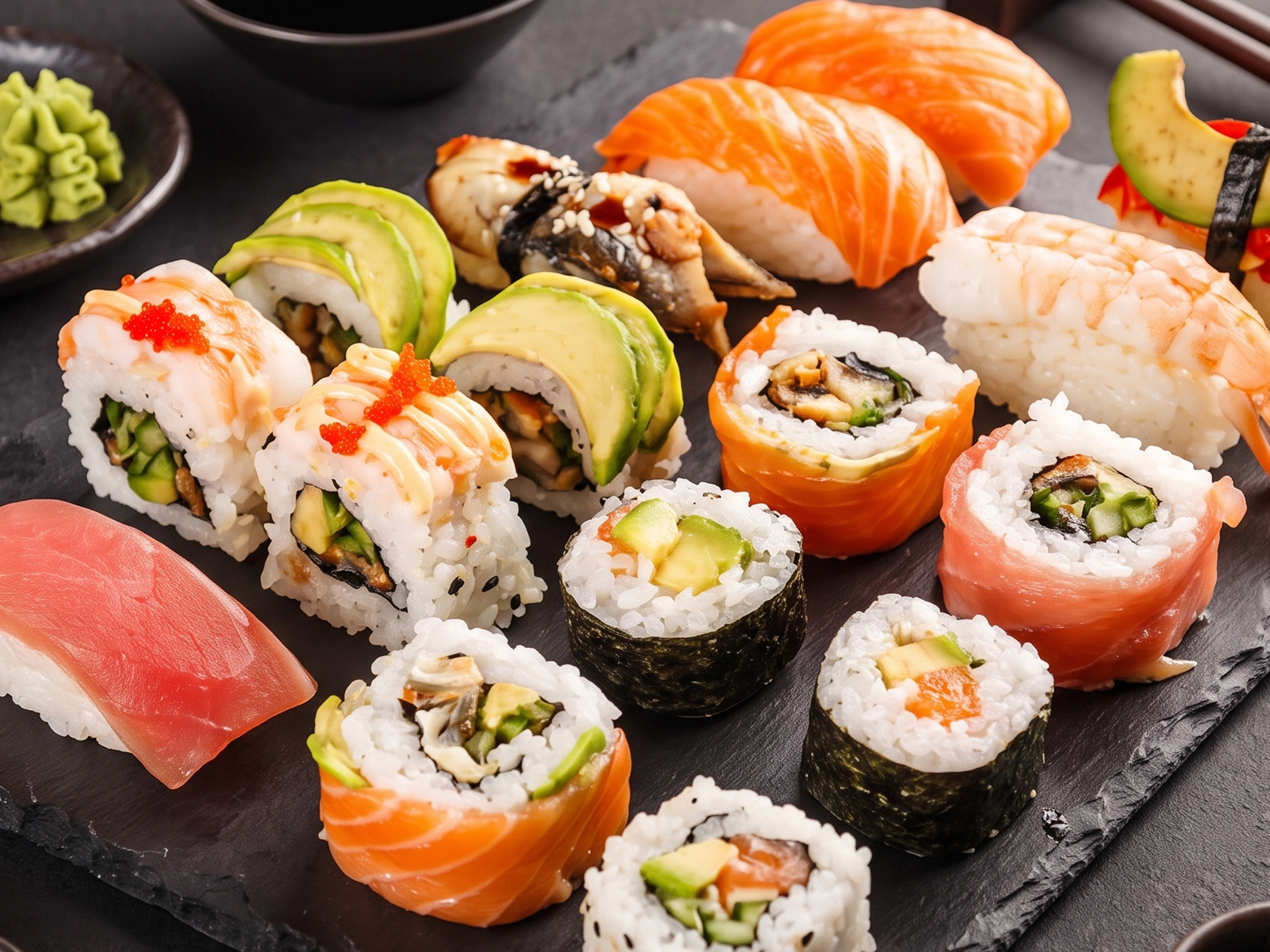
The most common types of sushi are Nigiri (pressed rice with fish on top), Maki (rolled in seaweed), Uramaki (rice on the outside), Temaki (hand-rolled cones), and Inari (tofu pockets).
When most people think about sushi, they usually imagine rolls. Surprisingly, some of the most traditional sushi forms are not rolled at all.
The ten types below break this progression, starting with simpler nigiri styles and moving toward more layered maki rolls.
Salmon Sushi
Difficulty Level: EasyIngredients: Sushi rice, salmon, rice vinegar, sugar, salt

By assembly and preparation, salmon sushi is one of the easiest types of sushi to make at home, as it mainly only needs raw salmon and seasoned sushi rice. However, the fact that it has fewer ingredients means it heavily relies on quality and how well those ingredients are prepared and combined, much unlike more complex sushi types where there are other ingredients that enhance or compensate for one another. Salmon sushi needs clean and fresh sashimi-grade salmon with pin bones and fatty edges removed, and Japanese short-grain rice that is perfectly seasoned.
To make salmon sushi, focus on learning how to shape sushi rice properly and slice fish evenly. Too much pressure and the rice becomes dense. Too little pressure and the piece falls apart.
Unagi Sushi
Difficulty Level: ModerateIngredients: Grilled freshwater eel, sushi rice, nori, eel sauce

Unagi means “freshwater eel” in Japanese. In contrast to historically implied traditional sushi where natural, raw seafood flavors are highlighted, unagi is typically grilled and brushed with a sweet soy-based glaze called tare.
According to Japan Guide, unagi sushi is most traditionally eaten during the Midsummer Day of the Ox (known as Doyo no Ushi no Hi), a national custom that takes place in late July or early August to fight summer fatigue. Because it is rich in vitamins, protein, and Omega-3s, it is believed to provide stamina to survive the sweltering heat.
Like salmon sushi, unagi sushi is also typically served as a type of nigiri which makes assembling easy. The bigger challenge here is sourcing high-quality eel and achieving a perfectly complementing rich eel sauce (called nitsume or kabayaki sauce).
Tamago Sushi
Difficulty Level: ModerateIngredients: Eggs, sugar, soy sauce, mirin, sushi rice

The star of tamago sushi is a Japanese rolled omelette called tamagoyaki, with tamago meaning “egg.”
Tamagoyaki is made by cooking multiple thin layers of egg in a rectangular pan, and then folding each layer before adding the next. A lot of professional sushi chefs see tamagoyaki as a test of craftsmanship because it requires great balance in consistency, texture, and sweetness.
Tamago sushi is great for beginners because it removes the pressure of handling seafood and allows attention to refocus on rice preparation and presentation.
Kani Sushi
Difficulty Level: EasyIngredients: Crab meat or kani sticks, sushi rice, optional sauces

Kani sushi (or crab sushi) is one of the best choices for those who want to make sushi at home. It is easy because it uses imitation crab sticks, which are highly accessible, affordable, and easy to use.
Aside from the convenience of the main ingredient, kani sushi is beginner-friendly because while it does not need complicated preparation, it still teaches important lessons about portioning and visual presentation. It is also one of the easiest sushi styles to customize with sauces or garnishes because of the mildness of the kani flavor.
Ebi Sushi
Difficulty Level: Easy to ModerateIngredients: Cooked shrimp, sushi rice, nori strips
Ebi sushi, or shrimp sushi, is a fresher take on seafood sushi because it is one of the few types of sushi that do not use raw seafood. Most of the effort goes into preparing and presenting the shrimp rather than handling delicate fish. The finished product looks polished enough to serve for dinner, despite its extreme simplicity.
What makes this great for beginners is that it eliminates concerns about handling raw fish. It also bridges the gap between familiar seafood dishes and traditional sushi. Because of its clean, lightly sweet flavor, it’s popular to both newcomers and longtime sushi lovers. The shrimp's firm texture also creates a pleasant contrast against the softness of seasoned rice.
Mango Kani Maki
Difficulty Level: EasyIngredients: Kani, ripe mango, cucumber, sushi rice, nori

California maki is a popular term used interchangeably for mango kani maki, and it is especially loved in the Philippines. This is one of the most common types of sushi wth fruit in it, bringing the sweetness and tropical flavors of mango and pairing it with fresh cucumbers and the mild seafood flavor of crab.
The ingredients are easy to find, easy to prepare, and forgiving during assembly. Even if your first roll comes out a little uneven, the flavors do not fail to shine through.
Alaskan Maki
Difficulty Level: ModerateIngredients: Salmon, avocado, cucumber, sushi rice, nori

Alaskan maki has almost every texture you’re looking for: rich salmon, creamy avocado, and crisp cucumber. This balance of flavors and textures made it quite a popular menu item around the world.
Alaskan maki is the best next step for home cooks after mastering simpler sushi recipes. The challenge here is to balance multiple fillings and make a clean roll. Too much avocado can overwhelm the roll, while uneven salmon slices can affect texture and appearance. It is often one of the first rolls that teaches beginners the importance of balance and that most of the time, the beauty of sushi relies on it.
Unagi Maki
Difficulty Level: ModerateIngredients: Grilled eel, cucumber, sushi rice, nori, eel sauce

You know how they say that food tastes different depending on how it is prepared and assembled? Like how sliced onions give a totally different vibe from diced onions. Some would disagree with this and argue that they are the same ingredient anyway, but unagi maki and unagi nigiri prove this wrong.
Unagi nigiri emphasizes the flavor of eel on its own; unagi maki puts it in between layers for a whole new experience. This sushi is surprisingly achievable because the eel is already cooked. If you have already mastered how to roll sushi cleanly, any sushi recipe can turn out looking like it came straight from a specialty restaurant.
Spicy Salmon Maki
Difficulty Level: ModerateIngredients: Salmon, spicy mayonnaise, sushi rice, nori

Adding spicy mayonnaise to salmon maki gives the salmon extra richness and a slight kick that makes people want more. It is one of the most popular modern sushi rolls for good reason: familiar ingredients, rich flavor, and plenty of room for customization.
Making it at home gives you the freedom to control the spice level. It also helps beginners practice consistency during rolling and slicing without having to commit to using multiple fillings.
Crazy Maki Roll
Difficulty Level: Advanced BeginnerIngredients: Seafood fillings, vegetables, sauces, toppings

The crazy maki roll is sushi at its fullest: multiple fillings, crunchy toppings, flavorful sauces, and colorful garnishes. Usually, no two versions are exactly alike, which is part of the fun.
Crazy Maki is great to make at home because it gives you a chance to experiment with ingredients you already have in the fridge. It looks intimidating at first, but there is actually plenty of room for improvisation. Crazy Maki is one of the most enjoyable recipes to make because it needs more creativity than perfection.
How to Make Sushi at Home
If you’ve ever thought about skipping restaurants and making your own sushi instead, but find yourself having trouble with proper handling and techniques, maybe you need guidance from professionals who make it inside commercial kitchens.Chef Allan Mertola, also called Chef A, was a Dimsum Chef at EDSA Shangrila Hotel for four years. He later became the Head Chef at Shitamachi Ramen Philippines for three years and had multiple appearances on local television. He is now a consultant at various restaurants in the country and supplies dimsum products to different five-star hotels and airlines. He is currently a co-owner of Hokkian Kitchen Co. and the owner of Chef A Dimsum Palace.
With knowledge and skills in sushi-making, Chef A shares his culinary expertise by serving as an instructor at several workshops around the country, including The Bailiwick Academy, an online learning platform for cooking and baking, for those who prefer to learn online.
His sushi online course covers the basics of making sushi, including proper preparation of sushi rice, slicing of fruits and vegetables, and the assembly of ten different sushi variants mentioned above.
