
FOOD NOTE
Why your baked goods never quite taste like bakery bread
There is one of three reasons a home baker attempts making bakery-style bread: [1] to start a business, [2] upgrade their creations and eat delicious pastries at home, or [3] simply to hopefully one day be able to say they can make the exact same thing you see on the display cabinet of French Baker.
A 6Wresearch forecast based on internal database and industry insights says the Philippines Bakery Market is growing at a compound annual growth rate (CAGR) of 7.5% during the forecast period (2026-2032). The Philippines Bakery Market is growing through three factors, including higher urbanization rates, increasing disposable incomes, and changing consumer behavior toward premium healthy products. This means that the demand for bakery goods, including bread and pastries, is increasing rapidly as urban populations grow.
In 2024 reports, baked goods sold in the Philippines amount to a staggering $2 billion (112,369,000,000 PHP) each year. For Filipino bakers looking into opening a bakery, it’s safe to say that success is almost guaranteed—except if you deem your products to be a bit lacking to be put out there.
DATEMAY 11, 2026
AUTHORANGELA CLARE AGPAWA
READ10 Min

Why your baked goods never quite taste like bakery bread
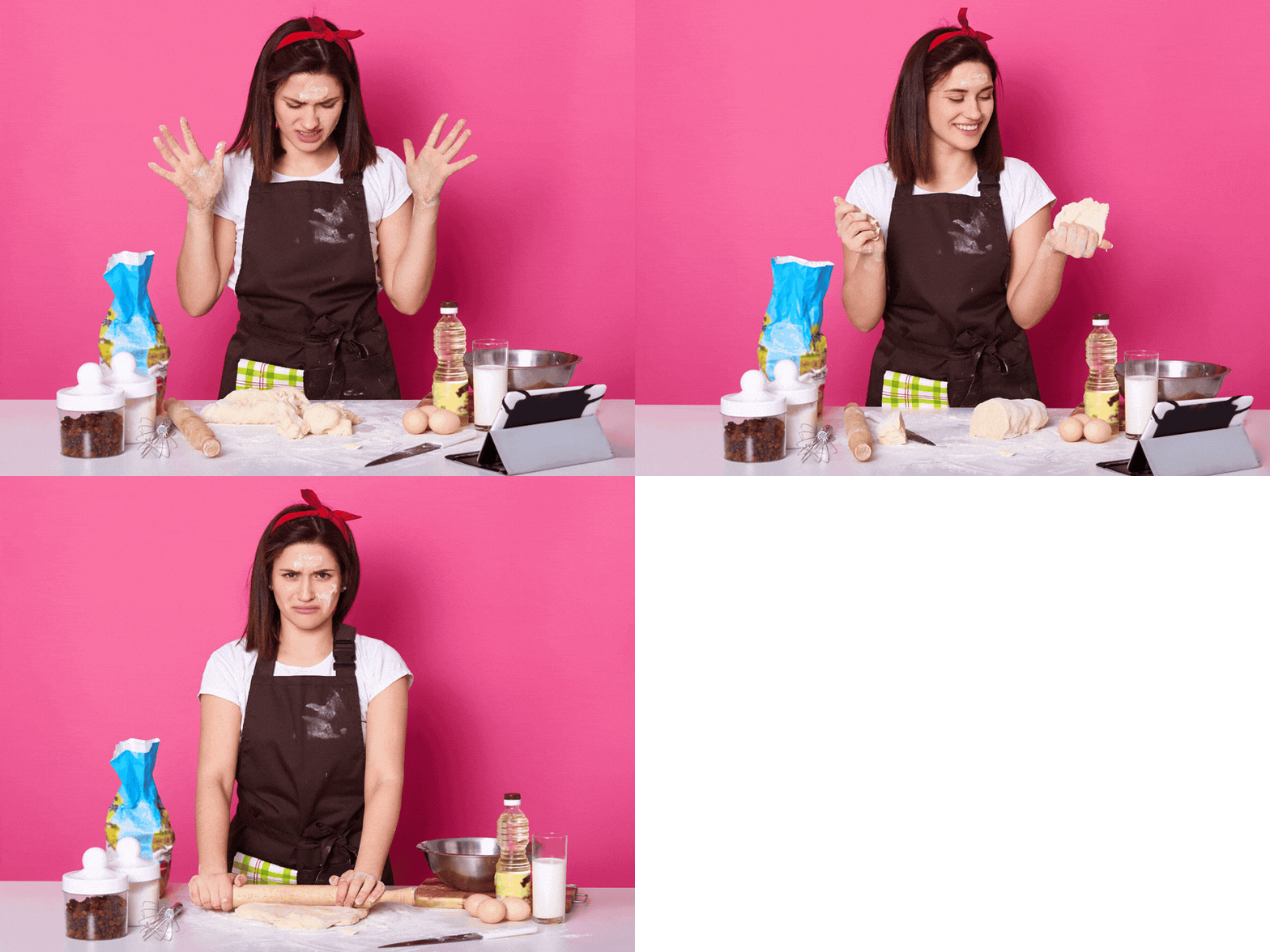
If you’ve already spent money and covered the whole kitchen in flour and still think there’s something off in your baked goods that makes it “not enough” for a bakery business, here’s probably what’s wrong:
You treat baking like cooking
One of the most common sayings in the culinary industry is this: Cooking is an art, baking is science.
Unlike cooking, where a pan is basically a canvas and the outcome is whatever you want it to be, baking is unimaginably precise. You cannot just substitute ingredients and eyeball measurements because every single alteration can make worlds of an impact in the finished product. You cannot expect white sugar to work and taste the same way as pure honey does, or add more liquids because you like it a “certain texture.” That might work in cooking, but almost never in baking.
If I may sneak a personal thought in here, I’ve once laughed at a comment in a Reddit forum asking about baking pet peeves that said, “People who legit don't follow the recipe. Lower your pride and do as the recipe says. Some things can't be measured with your heart.”
Truthfully, good baking starts when you let go of your experimental side—unless you’re a professional intentionally testing out recipes.

Not actually learning mixing methods
Many home bakers mistake mixing for stirring. Professional bakers take different mixing methods seriously because they have a direct effect on texture, flavor, and structure.
Stirring, for example, is useful only at the beginning to bring flour and water together. Kneading stretches and aligns gluten proteins so the dough becomes elastic enough to trap gas produced by yeast. Stretch-and-fold techniques strengthen dough while preserving internal air pockets. Slap-and-fold methods are typically used for wetter doughs because they build structure without adding too much flour.

This is why bakery recipes specify exact methods; they do not just say “mix.” They are key techniques that create the airy crumb, chewy texture, and fine structure observable in professional bread. If you unexpectedly find your homemade bread rubbery, dense, or flat in texture, look back because you might have stirred the dough when it was supposed to be folded, and the recipe is not the one to blame.
Even the timing of ingredients matters. Take brioche as an example. If butter is added too early, gluten struggles to develop and the bread turns dense. In croissant dough, too much mixing warms the dough and softens the butter, ruining the layers before lamination even begins. Even pandesal dough changes dramatically depending on how long it is kneaded and at what speed.
Experimenting temperatures
Professional bakeries monitor dough temperature obsessively. Many target a final dough temperature between 24°C and 26°C, depending on the recipe. This helps maintain consistency regardless of the weather.
In the Philippines, where kitchen temperatures usually exceed 30°C, dough can ferment much faster than suggested by recipes written in cooler countries. A bread formula copied from a European cookbook may overproof in half the expected time if the temperature is ignored.
Yeast is alive. It reacts to the warmth of the water, the temperature of the room, and even the friction created by a mixer. Dough that is too warm ferments too quickly and develops a sour or alcoholic taste. Dough that is too cold rises sluggishly and lacks volume.
It does not stop with dough. A lot of home bakers try to get smart and tamper with temperatures to make things more convenient. Many attempt doubling the oven temperature and halving the bake time. However, this does not work because it takes time for heat to spread well and evenly (called thermal conductivity). When you put dough in the oven, it is cold compared to the heat of the air around it. The outer layer that is closest to the heat will be hotter for longer than the center, enough to burn the crust before the heat even reaches the center.

It’s simple food science. Research in the Journal of Cereal Science shows that slight variations in fermentation time, gluten development, and heat exposure can significantly alter bread texture and flavor outcomes.
Bakeries own recipes and practice techniques that take years to master
Frankly, the biggest difference between baking hobbyists and professional bakers is experience. Baking requires a ridiculous amount of meticulous planning, refining formulas, and repeatedly adjusted ratios to get the perfect combination.
In France, bakers spend years apprenticing before producing classic breads independently. In Japan, some pastry chefs devote decades to mastering laminated dough. Even local Filipino bakeries guard recipes that have been handed down across generations. That explains that one iconic local panaderya everyone in your neighborhood worships.
The difference is not secret ingredients. It is accumulated knowledge.

This might be difficult to take in because it conveys the idea that you don’t try hard enough. But baking in itself comes with a lot of hidden techniques that can only be discovered through either firsthand experience, which would be impossible if you have only been baking for less than a couple of years, or learned from professionals, which you will rarely ever get from online recipes.
Many successful bakery owners started with the same feeling of confusion and frustration, until they decided they were done with the trial-and-error phase and started looking for real guidance.
Read: 5 Success Stories from The Bailiwick Academy Students
In the Philippines, The Bailiwick Academy is one of the most reliable online learning platforms for baking, where culinary professionals, both local and global, are gathered to share foundational principles, skills, and techniques used in commercial kitchens. They tell you what other instructors won’t; students are let in on real secrets and are guided through every single step. It’s a place for those who have no time for experimentation and want guaranteed success.

