
CULTURE READS
The Evolution of Jeepneys as a Cultural Icon
Growing up tagging along with your mom on her weekly grocery run means waiting out on the streets for a jeep and stooping over in it to find a seat once a driver pulls over. Once settled down, you’d look outside through the window about the same size and height as your head, allowing for the urge to poke your head through and get scolded by mama. If there are metal bars instead, you have probably held onto one during the entire ride too.
Having such an adventure regularly, being a curious kid means once wondering, “Where did those big, bright jeepneys come from?” or “Who decided that the jeepney become our most popular public mode of transportation?” but in an obviously much childish language in a soft, slightly squeaky voice.
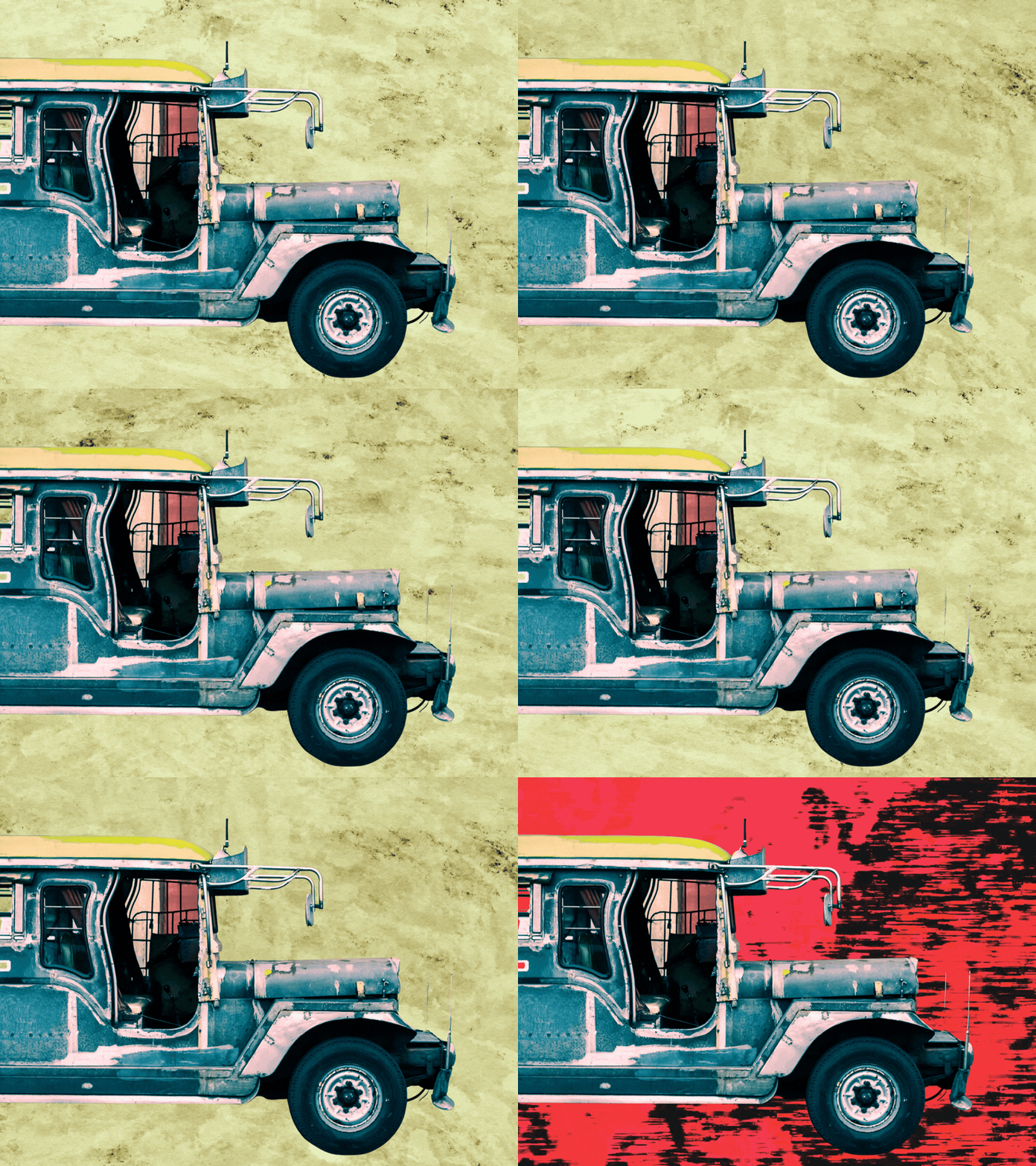
The Philippine jeepney being the country’s most used public utility vehicle and eventually becoming our most widely known cultural icon isn’t something that sprang out of nowhere. It actually has a pretty interesting history.
DATE
JANUARY 21, 2026
AUTHOR
ANGELA CLARE AGPAWA
READ
10 Min

The Evolution of Jeepneys as a Cultural Icon
We are now in an era where jeepneys have become more than vehicles. It has become the center of Philippine culture that foreigners would add “ride a jeepney” to their bucket list and travel all the way to the Philippines simply to check it off—and probably to say “para” to the driver as a bonus.
If you’re familiar with specialty restaurants that serve specific cuisines, you’d know how creative they can get with it. Japanese restaurants with tables disguised as train stations, Chinese restaurants that could pass as real-life temples, or French bakeries that you enter and immediately smell the city of love. Proud to say, the Philippines has that too!
Jeepney-Inspired Restaurants
Jeepney-inspired restaurants like Gerry’s Jeepney and Mr. Jeepney are some that people have taken quite a liking to. They embody what the original jeepneys look like—colorful, vibrant, cheery—just full-on maximalist. Unlike normal restaurants that are visually loud for generic aesthetic purposes, jeepney-inspired restos carry culture and decades of nostalgia, making it nowhere near overstimulating but rather cozy and homey. The fact that people crowd over places like these is proof that jeepneys are not just some mere transportation we have without a choice. It is something genuinely loved.

Jeepney-Based Games
Beyond restaurants, jeepneys have also become a concept for game creation. One that got viral it made headlines in 2023 was the Jeepney Simulator created by two students from Davao. The game allows players to experience what it’s like to be a jeepney driver—strolling on the roads, receiving fares, computing change, and even dealing with traffic and high fuel costs.
Jeepney Stories, on the other hand, is a lighthearted visual novel centered around the daily adventures of jeepney driver Mang Paldo and his conversations with people from different walks of life. It has different endings depending on how you play the game and interact with your passengers' fare, which can alter the fate of the characters in the game.
Such games not only incorporate jeepneys as an icon but also emphasize their importance as an entire culture that needs to be experienced and learned from

Jeepney-Inspired Merchandise
Filipinos’ (and even other races’) love for the Philippine jeepney stretches as far as the creation of merchandise. Shirts, mugs, keychains, tabletop models—you name it—there is always some sort of imaginative incorporation of jeepneys as a concept to different items.
In the food market, one of the most creative integrations is the use of jeepneys as a packaging design in addition to showcasing Filipino flavors. Manila Cookie Story came up with this bright idea of extracting the fun personality of jeepneys and putting an elegant approach to it as branding, making it not only visually memorable but also a great instant message that conveys that the product originates from the Philippines.
Manila Cookie Story’s shortbread cookies feature Filipino flavors such as Kape Barako (Barako Coffee cookies), Dark Tsokolate (Dark Chocolate cookies), Queso de Bola (Edam Cheese), and more.

The History of the Philippine Jeepney
As previously mentioned, the history of the Philippine Jeepney is quite interesting. It didn’t begin as an intent to build a vehicle specifically to carry passengers, but rather a result of turning what could’ve been garbage into something efficiently useful.
In June 1940, when World War II was on the horizon, the U.S. Army solicited bids from 135 automakers for a 1/4 ton "light reconnaissance vehicle" tailored to Army specifications. Within a year’s time after the company, Willys-Overland Motors, responded, they collectively produced the template for the vehicle known worldwide as the "jeep.”
At the end of World War II, hundreds of surplus of these jeeps were left behind by the American GIs when they left the Philippines. Filipinos then began repurposing them as buses with bodies made from galvanized or stainless steel, fabric covers instead of side windows, and mounted benches with room for about 20 passengers. It was later called the term “jeepney” which is believed to have originated from the combination of the words jeep (the original vehicle) and jitney, which refers to a vehicle carrying passengers for a low fare.

Seeing this as an opportunity for good transportation, Leonardo S. Sarao, a former kalesa driver (cochero), transformed surplus US military jeeps into the iconic Filipino jeepney, growing his small automotive shop in Las Piñas into a major manufacturer. He founded Sarao Motors in 1953, building massive numbers of the Philippine public transport vehicle and defining its look and function
Today, there are thousands upon thousands of unique jeepneys with different colors, sizes, and personalized designs that mirror the driver’s character and turn of mind, making it all the more sentimental beyond being a piece of culture.
People have long grown fond of this. Even with the existence of modernized jeepneys birthed from both innovation and the intent to phase out traditional jeepneys, the original always finds its way to the heart of Filipinos, proving that nothing beats a community backed by love for culture.
So, what’s your favorite jeepney culture? Share in the comments below!
Subscribe to Our Market for more.
