
CULTURE READS
Filipino Christmas Traditions That Never Die
As years pass by, more and more people are enveloped in this perspective that Christmas is losing its spark. But maybe Christmas never stopped being exciting; it’s just the inevitable blues of celebrating outside childhood which can absolutely be shaken away! It’s about time we revive the Christmas spirit and remember the things that make a Christmas celebration truly Filipino, truly fun, truly nostalgic.

Here are Filipino Christmas traditions that never die
Noche Buena
Filipino Noche Buena comes in different variations per family—some won’t celebrate it without spaghetti, some without queso de bola, some without the classic hamonado—but surely, it will be celebrated as long as there is family.
As a kid, your parents probably had to wake you up multiple times at midnight to celebrate Noche Buena with everyone. As an adult, you’re probably never asleep at midnight anymore but rather waiting ‘til the clock hits 12 to have the feast of the year. Either way, Noche Buena is pretty big of a deal in Filipino Christmas culture, and it’s one of the things that will continue forever.
Noche Buena is a Spanish term meaning “good night,” which refers to the Filipino Christmas Eve celebration where families gather at midnight to welcome the morning of Christmas Day together. In an article by Reader’s Digest, it was noted that back when the Philippines became a Spanish colony in the 16th century, Filipinos embraced this tradition to eat and celebrate after returning home from Simbang Gabi (another Filipino Christmas tradition where families and friends attend night masses).

Keeping the holiday table alive these days is now easier with convenient, ready-to-serve meals available online, having all-time Filipino favorites such as adobo, bangus, sisig, and more either preserved in bottles or packed nicely for easy serving.
Find a variety of options from Papaping’s, Elisha Bay, Better Options, and more!
Street Caroling
Going around random people’s houses singing Christmas carols is one of the verifiers that you’ve had fun Christmas celebrations during childhood. Nobody really cares if you sound like Mariah Carey or a dying duck—if you put in an effort, show up passionate, and flash a big smile, you can expect at least a coin drop onto your palm through the gaps of your neighbor’s gate. Not a lot of kids nowadays participate in this anymore, and some of us are probably “too old” to be knocking on people’s doors for spare change, so if you do hear a group hit a Christmas in Our Hearts at your or someone else’s door, take the time to listen and enjoy!

Christmas Games
Even though loving food and making it the center of every celebration is the most Filipino thing ever, laughing over Christmas games is one of the things we don’t forget to add. Hep Hep Hooray? A game no one can say they do not know how to play. Trip to Jerusalem? At the top of Christmas game classics. But what everyone really loves even unsaid is the Pabitin— the thrill of competing with other players, the enjoyable exhaustion from jumping up and down, and of course, free snacks!

You can make your celebration even more Filipino by using popular Filipino snacks from Flavors of Quezon, such as otap, broas, apas, banana chips, puto seko, chicharon, and more.
Christmas Decorations
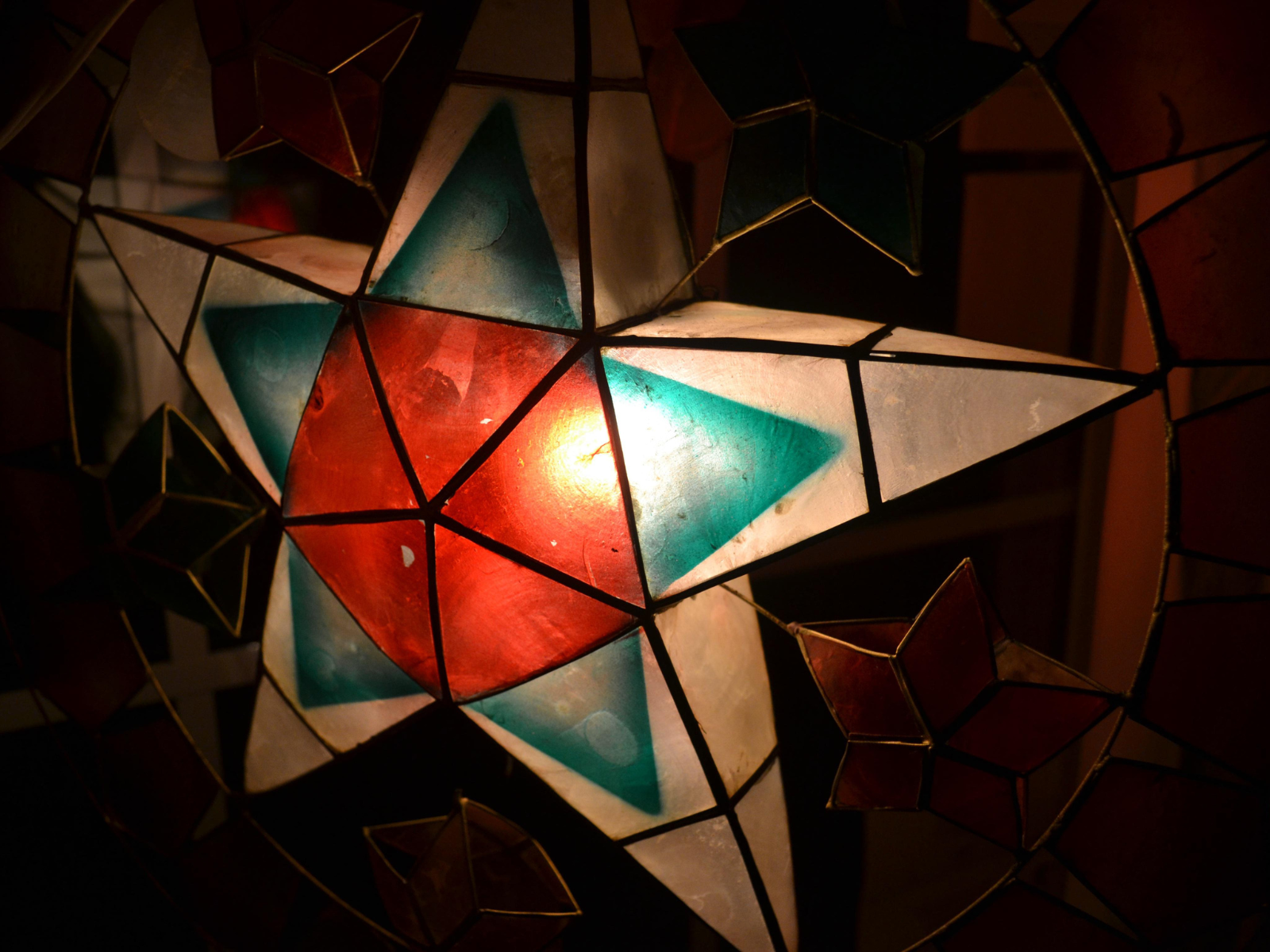
Christmas is already globally symbolized with a Christmas tree, wreaths, and bells. But in the Philippines, putting up Christmas decorations means hanging a Christmas parol or setting up the Belen (also known as Nativity Scene).

The parol is a star-shaped Filipino Christmas lantern which symbolizes the Star of Bethlehem. Though modern versions use various materials and lights, it is traditionally made from bamboo and paper and is meant to represent hope and guiding light during the festive season. The word comes from the Spanish word farol, meaning “lantern.”
The Belen on the other hand, is an exhibit of Jesus Christ’s birth in a manger, with figures of baby Jesus, Mary, Joseph, shepherds, wise men, angels, and animals in a stable. This is to represent the beginning of Christianity and foster reflection on the holiday's meaning.
Being a Christian-dominated country, this goes to show how Christmas in the country is centered around Jesus and celebrating his birth.
Monito Monita
Monito Monita is a popular Filipino version of Secret Santa. People draw names to secretly give small, themed gifts to one person over several weeks or days which culminates in a big reveal and main gift exchange at the Christmas party. It involves drawing names, following weekly themes (like "something sweet" or "something red"), and keeping the giver's identity secret to build fun anticipation. This often comes with a small budget for the interim gifts before the main present.

Even with a small budget, participants expect a nice and thoughtful gift—like a keychain, phone stand, earrings, bracelet, or necklace. It’s not impossible to find good pieces for an affordable price. SAC Clay Creations offer them for only below P100 which has gotten even much cheaper during the Christmas sale!
Ready to shop for a true paskong Pinoy? Don’t miss out on exciting Christmas deals on Iskaparate!