
CULTURE READS
Ancient Filipino Diet: What Archaeology Reveals About Pre-Colonial Food and Culture
DATEJULY 12, 2026
AUTHORANGELA CLARE AGPAWA
READ5 Min
Archaeological evidence presented by National Museum Researcher Dr. Ame Garong suggests that ancient Filipino diet was built around what was locally available, showing how geography shaped food traditions across different regions.
Tapping the intersection of culture and nutrition is an inarguably ideal way to celebrate the Philippine Nutrition Month and revisit a topic that shows the correlation and importance of the two aspects.

Ancient Filipino Diet According to Historical Research
There are not a lot of reliable ways to expose ancient Filipino diet. But to track it down and record legitimate findings, researcher Dr. Ame Garong of the Philippine National Museum’s Archaelogy Division went on a fieldwork across six burial sites dating from the paleolithic period (50,000 to 10,000 BC) to the historic period (16th to 19th centuries) and later published a titled “Ancient Filipino Diet: Reconstructing Diet from Human Remains Excavated in the Philippines” in 2013.
Dr. Ame examined collagen extracted from ancient human bones and teeth recovered from archaeological sites she visited, such as Batanes, Lal-lo in Cagayan, Benguet, Sta. Ana in Manila, and Boljoon in Cebu, and used isotope analysis using the extracted collagen and nitrogen isotopes to identify a person’s long-term diet.
Carbon isotopes particularly identify major plant sources while nitrogen isotopes reveal the amount and origin of dietary protein found in the bones, distinguishing foods obtained from marine, freshwater, and terrestrial environments.
To accurately interpret these values, Dr. Ame collected food samples from the same municipalities, including plants, fish, shellfish, and animals. These reference samples established the local isotope signatures used to compare with the archaeological remains, creating one of the clearest reconstructions of prehistoric Filipino foodways published to date.
There was not one specific Filipino diet that ancient human bones point to, but rather a mix of various food choices that depended largely on location and climate—ultimately food accessible to them.
So, according to findings, what did early Filipinos eat before Spanish colonization?
Ancient Filipino Food Culture in Different Regions
According to Dr. Ame Garong, , communities cultivated indigenous varieties of rice, millet, and sugarcane long before European contact. Providing most of the carbohydrates in a lot of regions were root crops like taro, yams, and sago palms, while vegetables, fruits, and seaweeds added dietary diversity.
They also harvested oysters, shellfish, gastropods, bivalves, coconut crabs, and other marine resources. Freshwater environments yielded catfish, mudfish, and other river species.

In mountainous areas, they hunted and killed carabaos, deer, and wild boars. They trapped smaller creatures like civet cats and low-flying birds. When they learned how to domesticate animals, they started herding goats and keeping pigs to add to the community’s food supply.
In a fishing village in Batanes, there was a fish that locals mentioned they have long consumed as a staple food. The old food fish was called the “arayu,” a type of dolphin fish and a lifeline for the Ivatan.
The fish was typically prepared by splitting it down the middle, scoring into equal portions, salting, and then drying for a week. It was either hung in a dedicated smokehouse made of bamboo and palm trees or over the hearth in the kitchen.
In Lal-lo, Dr. Ame found some burial sites in the shell middens. This is a large heap of discarded shells from sea creatures accumulated by generations of prehistoric Filipinos in the region. These eventually became burial sites where the dead were laid above this layer of shells to rest.

Some of these shell deposits can get up to ten feet deep. Some have been dated to come from as far back as the Neolithic period when people learned to use metal tools like shovels and axes to domesticate crops and herd animals. This was also considered the beginning of farming.
In Benguet Province, the Ibaloi tribe practiced mummification rituals. After death, their bodies were cleansed, rubbed with herbs, and heated while their mouths were filled with smoke—a process similar to smoked fish.
In the Sta. Ana, Manila site close to the Pasig River, locals utilized the Pasig River for their food. In Cebu, people were more accustomed to corn. According to Dr. Ame, they cannot grow rice so they relied on corn and millet. Over time, though rice became a staple crop in other regions in the Philippines, it never really took hold in Cebu because its soil was mostly made of limestone, a chalky type of soil in which rice does not grow well. When the Spanish brought corn to the Philippines, locals realized it thrived in this kind of soil and growing environment, so corn never left the Cebuanos’ diet.

How this discovery impacts modern food consumption
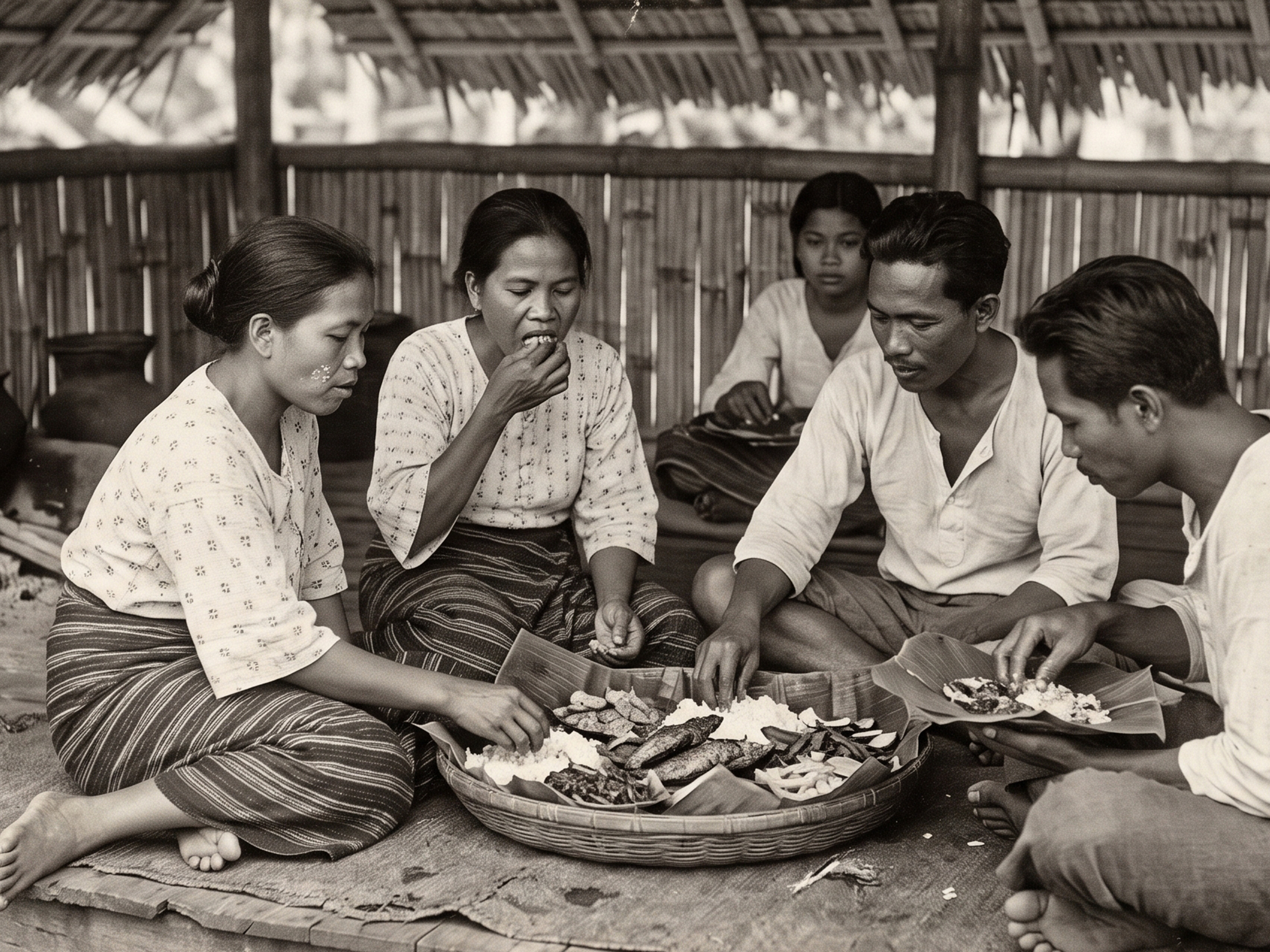
While prehistoric Filipinos certainly did not eat according to modern dietary guidelines, the archaeological record shows that their meals were mostly made using ingredients that were harvested, cultivated, or caught within immediate surroundings. Rice, millet, root crops, fish, shellfish, vegetables, seaweeds, fruits, and wild game were considered traditional Filipino food, forming the core of the pre-colonial Filipino diet.
In the Sta. Ana, Manila site close to the Pasig River, locals utilized the Pasig River for their food. In Cebu, people were more accustomed to corn. According to Dr. Ame, they cannot grow rice so they relied on corn and millet. Over time, though rice became a staple crop in other regions in the Philippines, it never really took hold in Cebu because its soil was mostly made of limestone, a chalky type of soil in which rice does not grow well. When the Spanish brought corn to the Philippines, locals realized it thrived in this kind of soil and growing environment, so corn never left the Cebuanos’ diet.
How this discovery impacts modern food consumption
While prehistoric Filipinos certainly did not eat according to modern dietary guidelines, the archaeological record shows that their meals were mostly made using ingredients that were harvested, cultivated, or caught within immediate surroundings. Rice, millet, root crops, fish, shellfish, vegetables, seaweeds, fruits, and wild game were considered traditional Filipino food, forming the core of the pre-colonial Filipino diet.
With this historical impact of what is deemed healthy in today’s consumption, modern recipes are anchored on such principles, ingredients, and even cooking methods. Combining traditional cooking practices and healthy eating habits with today's newest technologies, techniques, and fusion cuisine is prevalent, like this online cooking class at The Bailiwick Academy , featuring Healthy Dinner Ideas that teaches how to cook healthy food while keeping it delicious and within food trends.
This embodies similar principles still existing in contemporary nutrition research, which promotes healthy diets through eating whole foods, such as grains, fruits, vegetables, legumes, seafood, and minimally processed foods for better long-term health outcomes.
