
MARKET WATCH
The Founder of The Body Shop: The Woman Who Turned Beauty Into Activism
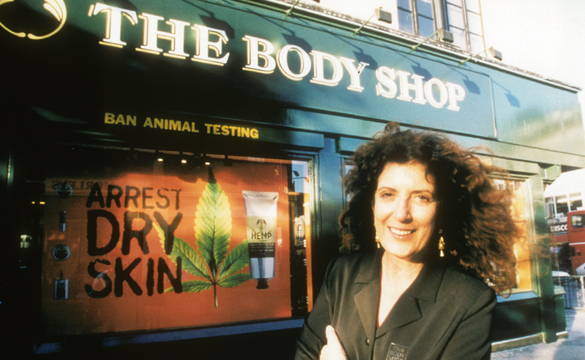
Some founders build companies, some build movement. For a brand that did not use wealth as a driving force, it may not be easy to imagine success. But Anita Roddick, the founder of The Body Shop, built all three.
There’s no season more perfect than Women’s Month to revisit a story that proves business can be bold, ethical, and political while being profitable. Way before marketing buzzwords like “clean beauty” and “cruelty-free,” Anita was already challenging consumers, governments, and corporations to do better.
DATEMARCH 08, 2026
AUTHORANGELA CLARE AGPAWA
READ10 Min

The Story of The Body Shop: Founder Anita Roddick
Anita opened the first Body Shop store in 1976 in Brighton, England. During this time, the beauty industry thrived on unattainable standards and unethical sourcing. Under this structure, women felt the need to achieve certain beauty ideals that misalign with their natural charm, using means that go against moral standards.
As a human rights activist and an environmental campaigner, Anita figured that the system needed objection, thus creating a beauty brand that countered the then considered norm. She believed beauty should not come at the expense of animals, exploited workers, or the planet.
The Body Shop carried products that were everything environmentally friendly: nature-inspired, sustainable, and cruelty-free. But most of all, it conveyed messages that rejected perfection and campaigned for embracing real beauty. Anita wanted her brand’s consumers to use its products to enhance what they have and feel good about their skin, not change it to meet the world’s unrealistic standards.
Community Fair Trade and Economic Empowerment

One of the most influential initiatives introduced by The Body Shop was the Community Fair Trade programme.
Launched in 1987, the program allows the company to work directly with farmers, artisans, and producers around the world, purchasing ingredients and materials at fair prices while helping communities earn stable incomes and maintain traditional livelihoods.
In many cases, women are at the center of these supply chains. For instance, partnerships with shea butter producers in Ghana have helped women gain consistent income and improve access to education and healthcare within their communities.
Fighting Animal Testing

The Body Shop’s firm stance against animal testing is another of its defining pillars. The brand has campaigned for decades to end cosmetic animal testing worldwide and pushed governments and regulators to adopt stricter protections for animals used in research.
On 2018 World Animal Day, The Body Shop partnered with Cruelty Free International and took 8.3 million signatures against cosmetic animal testing to the United Nations Headquarters in New York City. The petition signatures, collected from supporters around the world in just 15 months, call on the countries of the UN to end cosmetic animal testing.
As an application of its advocacy, The Body Shop uses three main testing methods that involve computer data and laboratory-created tissues. All cosmetics companies can adopt these kinds of animal-friendly testing methods.
In the modern world, this past advocacy helped shift consumer awareness and industry practices. It used to be a controversial position that eventually became a global standard many beauty brands now follow.
Sustainability and Responsible Consumption

The Body Shop has also introduced initiatives aimed at reducing waste, such as refill programs and recycling schemes that encourage customers to return empty packaging at participating stores for reuse or responsible processing.
These programs minimize negative environmental impact while encouraging customers to participate in sustainable habits.
Women Entrepreneurship
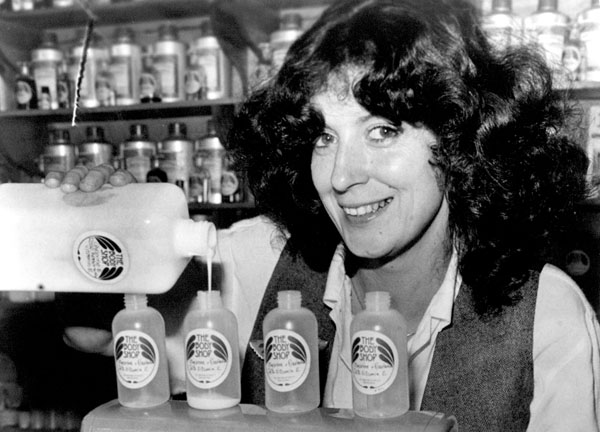
The story of Anita Roddick can conceive a lot of conclusions. While many of the revolutionary things she did could have been done by any other entrepreneur, most of them could point to the fact that she was a woman.
A theory by Simon Baron-Cohen that there are two broad cognitive tendencies: systemizing, which means thinking in terms of rules, patterns, and how things work, and empathizing, which means recognizing and responding to thoughts, feelings, and social dynamics. According to this framework, males score higher on systemizing measures, whereas females score higher on emphatizing measures.
Entrepreneurship, being a male-dominated field, could be supported by males’ systemizing cognitive tendencies, which allow them to pick up on business ideas and act on them linearly. Women, on the other hand, may think differently.
Anita Roddick did not present herself as a polished executive. She spoke bluntly, she challenged profit-first mentalities, she platformed issues many corporations avoided. The Body Shop’s campaigns addressed domestic violence, indigenous rights, and environmental protection.
Anita’s stores were petitions and activism masked as retail transactions—in a very brilliant way.
Anita is a model for many women entrepreneurs today, encouraging them to stand for something and design supply chains that empower and not exploit, treat customers as the real people they are and not just consumers who equate to sales on the spreadsheet.
For more inspirational stories and business tips, subscribe to Our Market.
